
Gold Rush 2025
November 2025
History
For thousands of years gold has been used for currency and trade as well as by artisans creating jewelry and sculptures. Additionally, gold has more recently experienced increased usage in industries such as electronics, aerospace, and medical/dental. Commonly referred to as a “safe haven” asset for investors during periods of economic volatility, inflation, and currency devaluation, this precious metal has found its way into everyday investor portfolios while also adorning their bodies.
Terminology
The U.S. term “Karat” refers to the purity of gold on a 24-part scale. Not to be confused with “Carat” which refers to the weight of a gemstone (e.g. diamond) with one carat equaling 200 milligrams with the density of the gemstone then impacting the physical size of the stone.
As the karat gold content rises, the gold becomes a richer/deeper yellow. With an elevated purity level, the selling price increases with 24-Karat gold being pure gold. As gold purity increases it also becomes more malleable while lower gold purity levels with an increased presence of other metals such as zinc, silver, copper, or palladium increase the hardness of the metal and its durability. Popular jewelry karat gold purities include 14k (58.3% Gold) and 18k (75.0% Gold) options, balancing both durability for everyday wear and purity for the consumer.
Gold Colors
Beyond yellow gold, consumers may choose from white gold which includes a mix of nickel or palladium with rhodium added for shine as well as rose gold which has a copper component to achieve the pinkish hue. A much less common option is green gold which is greenish/yellowish in color. Consumer trends change over time with consumers more recently showing increased interest in yellow as well as rose gold varieties.
Market Price
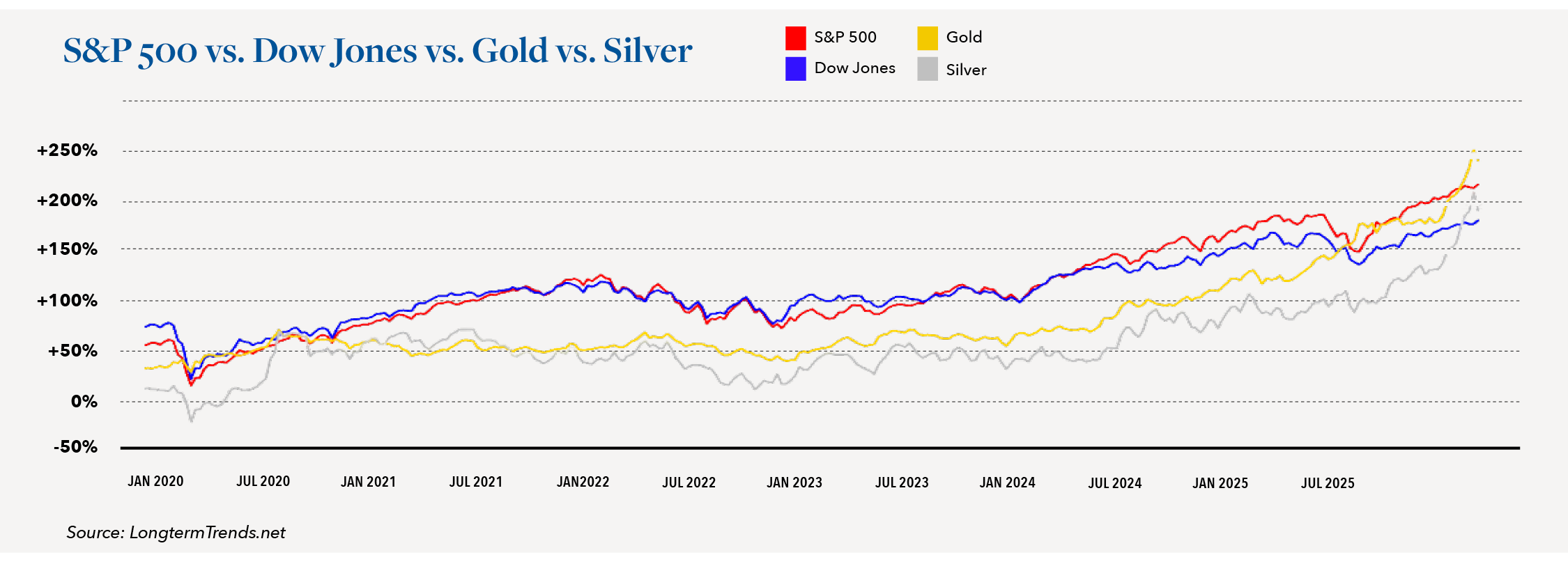
When analyzing investment returns over a multi-decade period, gold has underperformed the S&P 500, often running countercyclical to the equity markets. In the past year an interesting phenomenon has occurred with both gold and equity markets increasing in value amidst economic uncertainty with gold materially outpacing the S&P 500 during this time.
From mid-2020 through late 2023 gold prices were relatively stable, trading around $2,000 per ounce. Since then, gold has been on a steep upward trajectory, more than doubling in value in the past 12 months to over $4000 an ounce with various analysts targeting a continued runup in price going forward.
Jewelry Marketplace
The most notable change to gold and jewelry pricing stems from the runup in gold prices; however, the industry also must grapple with import tariffs. Beyond the US, key producers of jewelry include China, Italy, and India and domestic jewelry retailers have been faced with the impact from changes in U.S. tariff policy as a result. As the price of gold and other precious metals has started to materially increase, jewelers have had to make key strategic decisions on how define/refine their assortment and go to market approach. While each jewelry company may face unique circumstances, in general Hilco Global has noted two distinct paths being taken:
- For the jeweler that caters to the higher end segment of the market, price is less impactful with design being critical. For this part of the market jewelers have the luxury of being able to increase retail price with limited impact on unit demand. Generally, the less cost-conscious consumer will accept price increases which leads to higher total revenue dollars, even if unit demand declines. These customers facing price increases have generally occurred in the past 12 months.
- For jewelers catering to the mid to lower end of the customer spectrum, it becomes more difficult to pass price on to the customer. Alternative approaches to maintaining margin include reducing the karat purity in the offering (e.g. moving from 18k to 14k), changing the amount of gold in the piece (e.g. offering a gold-plated or hollow option), moving to lower cost precious metals (e.g. silver), or to even less expensive alternative metals (e.g. cobalt). While these changes lead to lower average selling prices, they help reduce customer falloff in the face of rising prices. Storytelling, which is common in the jewelry industry, becomes even more critical in these instances to win customers as a jeweler integrates these changes into its offering. Additionally, gold jewelry set with diamonds, has experienced a lower total acquisition cost given the material decline in diamond costs, notably lab grown stones.
Often in periods of rising gold prices combined with economic uncertainty, there will be an increase in customers selling gold pieces back to jewelers. These events provide jewelers with procurement cost savings and future margin opportunity while also creating a unique assortment of estate type pieces to offer clients.
Valuation Impact
As the price of gold and other precious metals change (and gemstones too), it is key for the Lender to monitor not only changes in customer facing pricing and any subsequent change in average selling price, revenue dollars, unit sales, and achieved gross margin, but also any changes in product costing. A key consideration in the appraisal analysis considers the value the pieces are being held at on the perpetual in comparison to current market replacement cost. A net favorable position benefits the appraisal.
Most owned jewelry is slow moving, often turning once, or even less, per year. The slow-moving nature of jewelry often leads to longer sale terms in an appraisal and can challenge recovery values. However, while pieces may be slow moving there is an intrinsic value to the piece, with material content that could be repurposed by an opportunity buyer. Therefore, this creates a type of floor for the recovery value despite the age of the piece. This melt value becomes a greater consideration in higher priced pieces where the metal content value and/or gemstone value far exceeds the related labor and overhead absorbed into the total cost of the piece.
While many consumer products have experienced general inflation, the impact to jewelry has been a bit unique as the demand for the raw material found in these goods is being impacted not necessarily by consumer demand for jewelry, but investor demand for the gold commodity. This brings a unique set of challenges for jewelry borrowers to navigate which in turn impacts financial performance and appraised value.