Locus Fermentation Solutions Patent Acquisition Opportunity
Locus Fermentation Solutions (“Locus”) is a Solon, Ohio-based biotech company delivering innovative bio-enhanced specialty chemical blends. Hilco Global IP Services is seeking offers to acquire any or all of Locus’s 170+ non-core patents and applications with global coverage. The technology includes advancements in animal nutrition, skincare, cement, health & pharma, food production, and textile printing & dyeing.
Hilco Global is seeking non-binding indications of interest to acquire all or any selection of patents in Locus’s non-core portfolio.
Locus may negotiate with interested parties and, in the event that an indication of interest is acceptable, enter into a transaction at any time.
Interested parties should reach out to Hilco Global to obtain a nondisclosure agreement and additional information.
Built on deep microbial expertise, Locus was founded with the mission of pushing the boundaries of traditional chemistry by using unique fermentation-enabled molecules. Its proprietary platform precisely identifies and controls the strains needed to produce high-performance, glycolipid- and microbial-enhanced intermediates – including sophorolipids and other biosurfactants – to drive superior performance and sustainability across global industries, including functions from enhanced cleaning to improved oil extraction and increased crop yields.

Locus’s patented biomanufacturing technology delivers biological alternatives to chemicals that are tailored to address global ESG challenges, accelerating decarbonization goals for users.
Originally founded over 10 years ago, Locus invested heavily in R&D and intellectual property to lay the groundwork for a broad portfolio of bio-based technologies across multiple industries with scalable, sustainable fermentation capabilities. In recent years, Locus has shifted its focus to commercialization and has deemed certain technology areas in which it previously patented to be non-core to the business going forward. Locus has retained Hilco Global to monetize these non-core assets.
This presents a unique opportunity for operators in the animal nutrition, skincare, cement, health & pharma, food, and textiles spaces to acquire unencumbered granted and pending patents with truly global coverage. A buyer of any segment of the portfolio can capitalize on years and millions of dollars of R&D investment to enable existing businesses and commercialize new products in these markets or to support and legitimize companies seeking funding. Additionally, the portfolio’s emphasis on sustainability can add value to enterprises in jurisdictions where reduction of methane and carbon dioxide emissions are a focus.
Companies in the animal health and nutrition space can enhance their portfolio of products with the deployment of 60+ patents and applications across 14 jurisdictions in Asia, Europe, and North and South America. The technology’s core theme is the use of microbial compositions and their by-products to improve biological efficiency, animal health, and environmental outcomes in agriculture and aquaculture.
The portfolio comprises strategies built around microbial biology, emissions reduction, productivity gains, and circular agriculture, adding value by:
- Reducing livestock-associated methane and other GHG emissions

- Producing higher-quality feed and reducing feed loss to improve animal performance
- Improving water quality, resulting in healthier, faster-growing aquatic species
- Engineering microbiomes to improve animal efficiency and health
- Closing the nutrient loop by turning waste into a valuable input
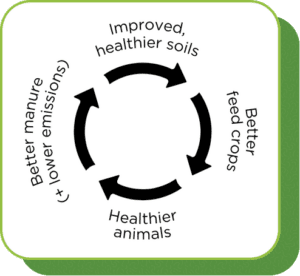
Same tools, different delivery points, improved outcomes:
The innovative technologies emphasize the multi-functionality of microbes, which can
a) Improve animal digestion
b) Reduce methane
c) Enhance soil health
d) Stabilize feed
e) Process waste
Four different universities conducted studies analyzing the effectiveness of Locus’s feed additives on decreasing enteric methane emissions while maintaining animal productivity, supporting their potential to inhibit methanogenesis in vivo and on a larger scale. Preliminary in vitro experiments with Locus’s microbial preparation Bacillus subtilis have shown up to 25% methane mitigation effect, and a Locus Bacillus sp. direct-fed microbial, Amplio, has demonstrated up to 78% reductions in methane within in vitro systems.
 Locus’s portfolio of skincare and cosmetics patents, including over 50 patents and applications across 15+ jurisdictions worldwide, cover compositions aimed at treating numerous skin and other conditions.
Covering biosurfactant-based solutions for medicated skincare, hair care, sun care, and more, an acquirer of Locus’s patents has the unique opportunity to implement the technology via IP-protected skincare and personal care product lines in significant markets.
Biosurfactant-based products offer a gentler, lower-cost, and faster-acting solution for numerous skin conditions. Glycolipids (a class of natural biosurfactants) are organic molecules produced by living microorganisms that offer:
- Lower toxicity and less irritation risk compared to chemical alternatives
- Lower surface tension between liquids, particularly beneficial for products targeting dry skin
- Improved environmental effects

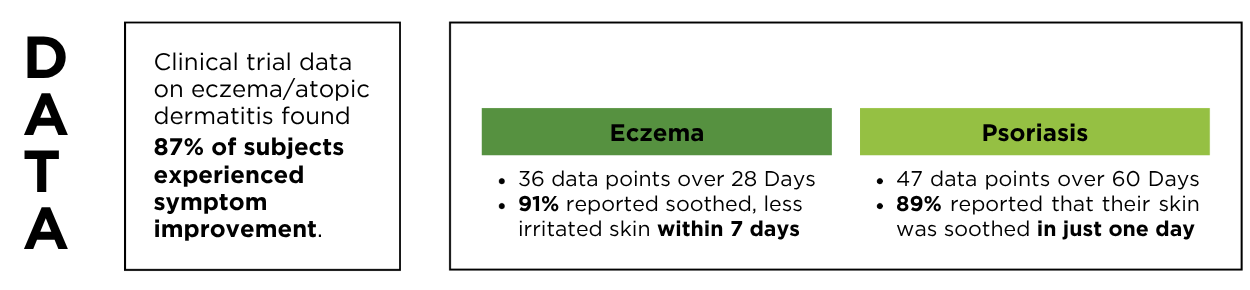
Locus launched two B2C skincare products targeting eczema & psoriasis, backed by Locus patent “Cosmetic Compositions for Skin Health and Methods of Using Same,” demonstrating the efficacy of the patent’s covered technology.
Locus has developed innovative technology around the use of microbe-based compositions and biosurfactants in concrete and cement formulations to reduce clinker usage, thereby having a lower carbon footprint, and improve properties such as strength and flow of the concrete/cement. This portfolio includes 8 patents and applications across the U.S., Brazil, China, India, Japan, Mexico, and Vietnam.
Cement is the second most consumed resource on the planet – behind water and above food – and contributes 6%-8% of global annual greenhouse gas emissions. Clinker, the base ingredient of cement, is produced in furnaces run continuously at 2400°F.
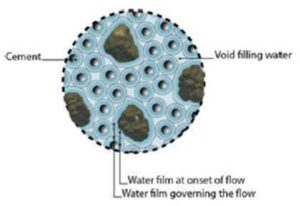
Locus’s specialized biosurfactant additives deliver the combined functionality of traditional surfactants and superplasticizers, with fewer associated downsides and near net-zero impact. By increasing the amount of water closer to the cement grains, Locus’s technology creates a stronger bond that prevents free water formation and helps to boost strength development over time. Even when concentration is as low as 0.025% by weight of water, no free water is detected.
 In third-party tests, even at very low dosage rates of 0.1%, Locus biosurfactants enable higher heat flow peaks compared to traditional chemistries, suggesting a higher density of hydrates formed, which directly correlates to increased strength.
Trials show that Locus’s products contribute to improved binder hydration and workability. Increased wettability of solid surface corresponds to better workability (less energy use for mixing) and reduced bleeding (free water), as confirmed by a major green cement company in comparative trials.
Locus’s health and pharma portfolio centers on biosurfactants used as functional excipients in medicines and cosmetics to disrupt biofilms and help antimicrobials work better, increase the solubility and bioavailability of drugs and supplements, improve stability and localization of compounds in the body, and enable special delivery routes.
The technology is covered by 40+ patents and applications in 15 jurisdictions across Africa, Asia, Australia, Europe, and North and South America.
The portfolio adds value by enabling biosurfactants that
- Serve as a biofilm “opener,” disrupting the boundary between oil and water and making biocides and antibiotics more effective
- Enhance the bioavailability of health-promoting substances, upgrading many existing active ingredients without inventing new drugs
- Improve and expand medicinal delivery methods and potentially treat a number of central nervous system indications
The segment’s primary positioning as additives provides an opportunity for development as an ingredient in antibiotics, OTC drugs, and CNS therapeutics or as a product itself to be licensed to partners that develop such medicines.
Locus developed two families of patents and applications (including 6+ patents total) with coverage in Canada, Costa Rica, India, Mexico, and Malaysia that cover biosurfactants and other microbe-based compositions for use as emulsifiers and stabilizers in food emulsions and dispersions, as well as for use in remediating food processing wastes.
Food emulsifiers and stabilizers have myriad use-cases, including in sauces, dressings, dairy alternatives, baked goods, beverages, processed meats, and plant-based foods – all high-volume, repeat-use ingredients, offering stable revenue potential through ingredient supply or licensing. The technology’s foundation in microbials and fermentation can replace synthetic additives to align with eco- and health-conscious consumers and future-proof products against potential regulation without sacrificing shelf-life or texture.
Patents covering microbial and biosurfactant methods for remediating food processing wastes address high-cost industrial issues faced by food processors including buildup of fats, oil, and grease (FOG) that clog pipes and treatment systems, regulatory pressure on wastewater discharge, and disposal costs for organic solids, among others. The combination of bacteria that degrade proteins + biosurfactants that emulsify hydrophobic waste enables faster breakdown, higher throughput, and less mechanical pre-treatment required.
These direct, quantifiable cost savings translate to a quick ROI for the buyer of this patent family. Wastes covered by the patent include palm oil effluent, slaughterhouse trimmings, as well as dairy, meat, and food manufacturing FOG, giving it broad applicability across industries and geographies. Additionally, the methods reduce methane generation, chemical usage, and sludge hauling, supporting ESG and regulatory alignment.
Locus developed two families of patents (7 patents total) with coverage in the U.S., Australia, China, India, and Vietnam, that cover biosurfactant additives for improving textile production, leather tanning, and the printing and dyeing of paper and textiles by reducing water and chemical usage, as well as reducing wastewater pollution.
The biosurfactants covered by Locus’s patents improve pigment dispersion, ink stability, and substrate wetting so less dye/ink is required to achieve the same color intensity and uniformity. At the same time, they improve dye fixation efficiency, reduce unfixed dye, and shorten or eliminate rinse cycles, meaning less water is needed and less effluent is produced. The patent covers several materials including natural and synthetic fibers, blended fabrics, and paper, providing broad market coverage.
Textile processing and leather tanning are among the most water- and chemical-intensive industrial sectors. Locus’s patents cover methods that could lead to direct cost reduction in these resource-intensive industries. Specifically, the covered biosurfactant additives can lower operating costs through reduced water, energy, and chemical consumption by:
- Improving wetting and penetration of fibers and hides
- Emulsifying fats and impurities more efficiently
- Reducing the number of processing steps
- Reducing the need for and even replacing harsh, regulated chemicals, resulting in easier compliance with tightening environmental standards
Wastewater that is produced has a reduced color load, lower toxicity, and is more easily treated, providing cost savings particularly to suppliers in regions where effluent discharge is more heavily regulated.
Interested parties should reach out to [email protected]