IP Strategy Development
A deliberate plan for how intellectual property supports the business over the next 12 to 24 months.
What It Is
An engagement that produces a structured IP strategy document. It sets out what the company has, what it should invest in, what it should divest, what it should defend, and how its intellectual property connects to specific commercial goals. It is not a legal document, and it is not a generic IP policy. It is a practical plan written for the operating business, with the IP-specific dimensions of decisions the business is already making.
Most companies do not have a deliberate IP strategy. They have a patent portfolio that grew organically, a trade mark register that was set up at one point and then drifted, and a collection of contracts and trade secrets that nobody has thought about systematically. The IP estate ends up costing money to maintain but not actively supporting the commercial direction of the business.
Why You Would Need It
Most engagements are triggered by a specific commercial moment: a fundraise where investors will ask difficult questions about IP, a planned exit where a buyer’s diligence will scrutinise the estate, a new market entry where freedom-to-operate matters, or a leadership change where a new GC or CEO wants a clear picture of what they have inherited. Less commonly, but increasingly, the trigger is a board-level realisation that the IP function is not earning its keep.
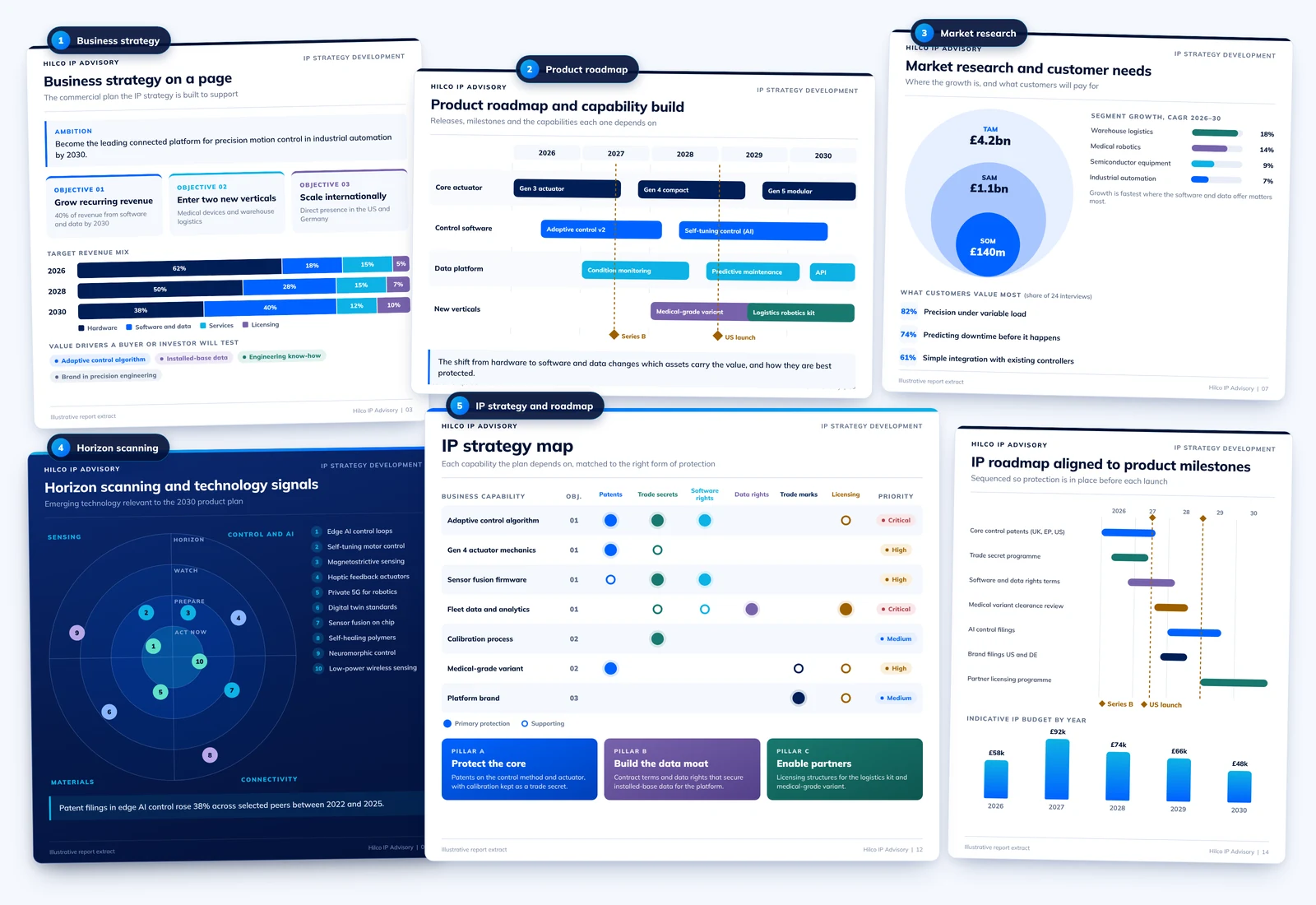
A strategy document of 20 to 40 pages structured around the company's specific situation. Includes the IP estate as it currently stands, the strategic rationale for changes, a prioritised action plan with commercial milestones attached, and the implementation framework. Delivered through a series of working sessions with the leadership team, not as a one-shot consultancy report.
Where This Sits In The Broader IP Work
Typically follows IP Discovery, Competitive Benchmarking, and IP Risk Assessment, which provide the diagnostic foundation. Often leads into operational work (IP Audit, Innovation Harvesting) and the feasibility stage of Patent Box work once the strategic direction is set. Aligned to commercial work the company is doing anyway (fundraise, exit, market entry) rather than commissioned in the abstract.